

Lengthwise grain
Our standardBoards run the full length of the table. Long, unbroken lines of figure draw the eye from end to end — the classic look of a fine dining table, and the most stable way to build one.

A shaped top is defined by three decisions: the direction of the grain, the outline of the top, and the profile of its edge. A live edge top lets the tree draw the outline. Learn the words here — then use them to design your own.
Every top is assembled from individual boards. Their direction sets the rhythm of the figure — and decides how the table will breathe with the seasons.
Boards run the full length of the table. Long, unbroken lines of figure draw the eye from end to end — the classic look of a fine dining table, and the most stable way to build one.


Boards run across the width, so each place setting sits on its own stretch of figure. A striking, architectural look — and a genuinely harder table to build.
More movement. With boards running across, the table's long dimension becomes the one that swells and shrinks with New England's humid summers and dry winters — almost twice the seasonal movement of a lengthwise top.
More engineering. The base must let the top travel along its full length, using slotted and floating fasteners, and the aprons and stretchers are designed around it.
More boards, more joints. Many shorter boards replace a few long ones, each matched for color and figure so the top still reads as one cohesive piece.
Shape changes how a room flows and how a table gathers people. Subtle curves soften a long top; a round brings everyone face to face.
Straight sides and crisp, eased corners. Timeless and architectural; seats the most guests for its size.

Straight sides with ends that bow gently outward. Softens the heads of the table and eases traffic around them.
Sides swell to their widest at the center. Guests along the length can see one another — a natural for conversation.

Every side gently bowed, every corner softened. The most relaxed rectangle — formal enough to dine, easy to live with.

No head, no foot. Everyone faces the center — the most intimate shape for breakfast nooks and smaller rooms.

Straight sides that sweep into generously radiused corners and softly bowed ends. Gentle on hips in a busy kitchen.
The edge is the part of a table you touch every day. Its profile changes how thick the top looks and how it catches the light.

Reads as a crisp, square slab, but kind to the touch. The quietest, most modern choice.

A slightly fuller radius that softens the silhouette without losing the clean line.

Hides some of the top's thickness from view, so a substantial table looks light and floating.

A generous curve where forearms rest, with a crisp line below. Comfortable and traditional.

Fully rounded, top and bottom. The softest edge we make — warm, and especially family-friendly.

A classical S-curve that throws a band of light and shadow. Formal, traditional, and decorative.
A live edge top keeps the natural edge of the tree along its sides. We join slabs cut from the same tree, so color and figure belong together, and the top reads as one piece.
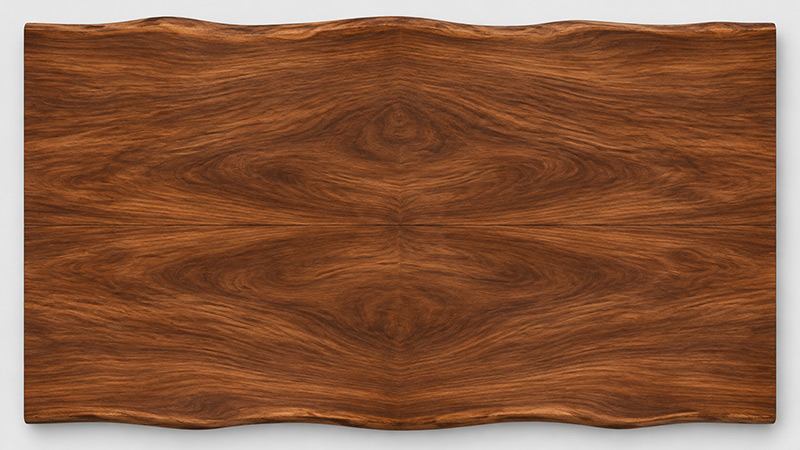
Consecutive slabs opened like the pages of a book, so the figure mirrors across the center seam. Symmetrical, balanced, and striking.
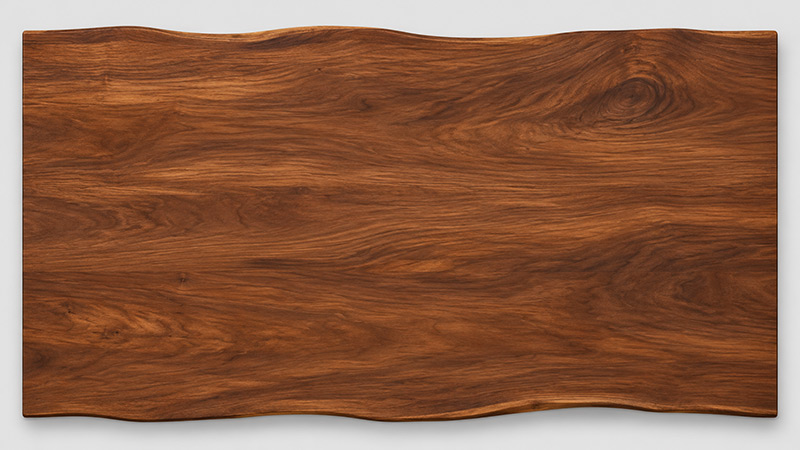
Slabs from the same tree joined side by side. Color and figure flow naturally across the top, without the mirror image of a book match.
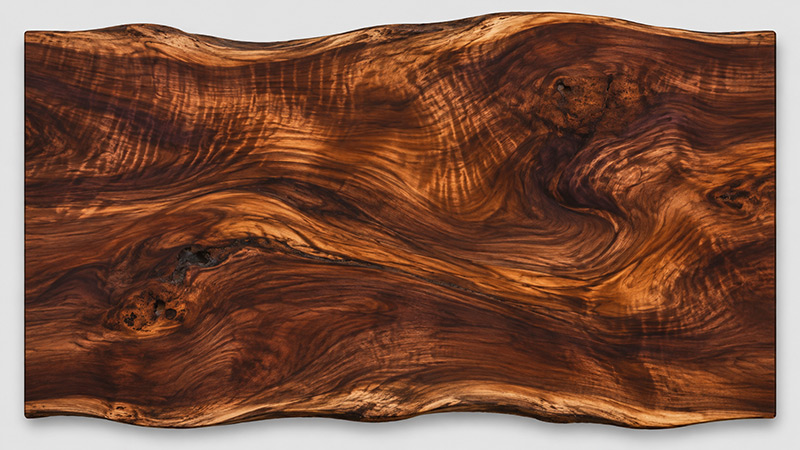
One wide slab from one tree. Truly rare, and reserved for Heirloom Commissions — we search for the slab together.
Grain always runs lengthwise. The slab is the board, so the figure follows the length of the tree — and of your table.
The sides stay natural. We clean and finish the living edge by hand; the ends are cut square and given the profile you choose.
You choose your slabs. Every live edge top is one of a kind. We send photos of the actual slabs set aside for your table before anything is cut.
Shaped or live edge — make your choices and we'll turn them into the start of a commission — and send a hand-finished Striking from your wood.